
Work Compensation Australia: Must Knows, Tips & Legal Support

Key Takeaway: NSW workers compensation gives injured workers five main entitlements, including weekly payments, medical expenses, domestic assistance and lump-sum compensation. A lump-sum payment becomes available once your physical injury reaches 10% whole person impairment, or 14% for a psychological injury. Withstand Lawyers act on a no win, no fee basis with a 99% success rate.
Workers Compensation: Quick Answers
<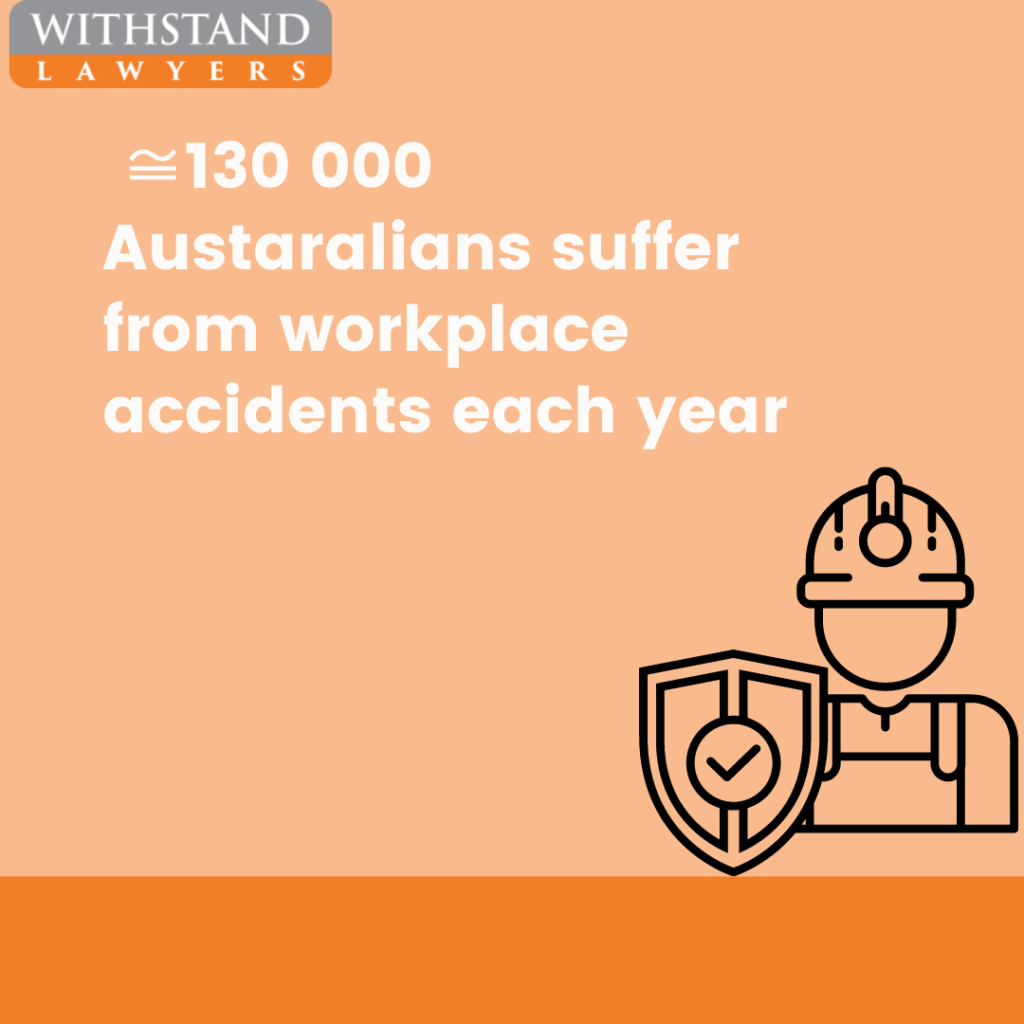
If you are reading this blog, you or a loved one is probably one of Australia’s ≅130 000 yearly sufferers of workplace accidents. Although, workplace accidents happen to anyone, most people don’t know how to claim and their entitlements.
As an experienced worker compensation lawyer I will explain
- Your entitlements
- Eligibility for work compensation
- Common types of work injuries
- Steps of making a work compensation
- Benefits of working with our workers comensation lawyers and more.
Must know information regarding work compensation
What is work compensation?
Work compensation (also known as worker compensation) serves as a means to alleviate health issues that employees may experience as a result of their work-related activities. These benefits include:
- Medical treatment
- Wage replacement
- Rehabilitation services and more.
In Australia, work compensation is governed by individual state laws, with each jurisdiction having its own specific requirements and regulations.
What are your workers compensation entitlements?
Labours have 5 main entitlements as a worker compensation:
- Weekly payments: Payment based on contracted salary.
- Compensation for medical expenses: A remedy to help cover your healthcare expenses when you have a health issue related to your job.
- Domestic assistance: Include compensation for daily tasks such as laundry, cleaning etc.
- Lump-sum payment: If physical work injury exceeds 10% (for psychological 14%) you are entitled to have a lump-sum payment.
- Common law payout: If you have been hurt at work and your injury causes a 15% or higher whole person impairment, you may be eligible to make a payout claim. This means you can ask for a one-time payment that covers the income you will lose until you retire.
Below image provides general statistics regarding work compensation in Australia.
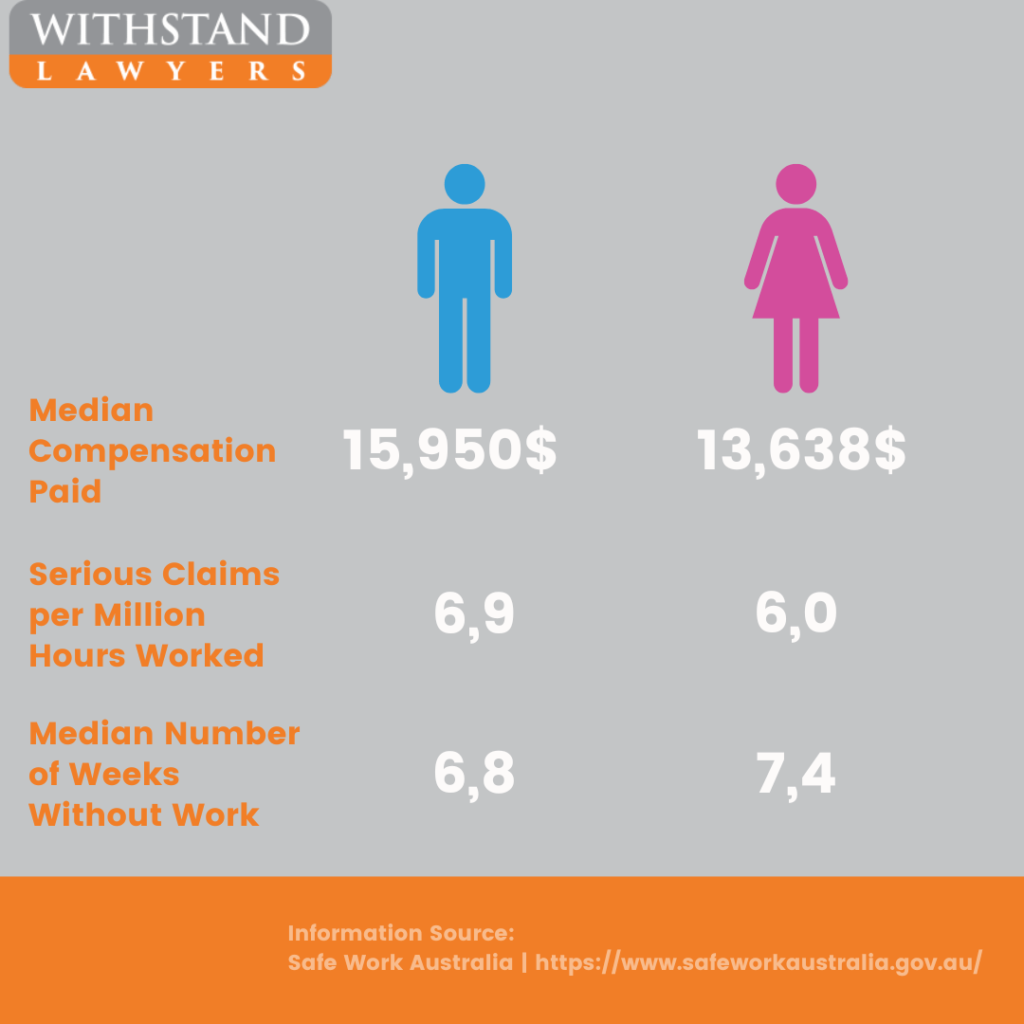
You can read our Permanent Impairment Calculator article to find out your payout amount.
Who is eligible for work compensation?
To qualify for work compensation, you must have sustained an injury or illness while performing your job duties or as a direct result of your work. This includes:
- Physical injuries like broken bones or sprains
- Occupational illnesses caused by exposure to dangerous substances.
- Psychological or emotional injuries that are related to work.
How is worker compensation different from TPD?
As a Total and Permanent Disability (TPD) and worker compensation lawyer, I experienced that many people tend to confuse work compensation with TPD or vice versa. The main difference between TPD benefits and work compensation is, to be eligible for compensation you must have a health condition which is directly related to your work.
On the other handi to qualify for TPD, your health condition must not be connected to your job, such as getting hurt in a car accident during a vacation. This health issue should also cause a permanent inability to do your job.
To learn more regarding TPD you can read our TPD Claim Stories article.
Common types of work injuries and how they impact your compensation claim
Accidents can occur on the job in any field, whether you’re working on a construction site, in a healthcare setting, or in an office. Based on my personal experience with worker compensations, I’ve found that the following types of injuries are frequently seen in the workplace:
- Sprains and strains: These types of injuries are common in jobs that require repetitive motions or heavy lifting. They can range from mild to severe and may require medical treatment and time off work to recover. If you’ve suffered a sprain or strain at work, you may be eligible for compensation to cover medical expenses and lost wages.
- Fractures: Broken bones can happen in a variety of work settings, from construction sites to office buildings. Depending on the severity of the fracture, you may require surgery, physical therapy, and time off work to recover. If your fracture was caused by a work-related incident, you may be able to receive compensation to cover your medical expenses and lost wages.
- Burns: Burns can happen in many workplaces, especially in industries that involve the use of chemicals or machinery. They can range from minor to severe and may require extensive medical treatment, including skin grafts and rehabilitation. If you’ve suffered a burn at work, you may be eligible for compensation to cover your medical expenses and lost wages.
- Back injuries: Back injuries can be caused by heavy lifting, repetitive motions, and falls. They can be debilitating and may require extensive medical treatment and time off work to recover. If you’ve suffered a back injury at work, you may be able to receive compensation to cover your medical expenses and lost wages.
In order to receive compensation for a work-related injury, you will need to file a claim and provide detailed information about the incident and your injuries. The severity and type of injury can impact the amount of compensation you receive, as well as the length of time it takes to recover. Working with an experienced work compensation lawyer can help ensure that you receive the benefits you deserve.
How to make a work compensation claim?
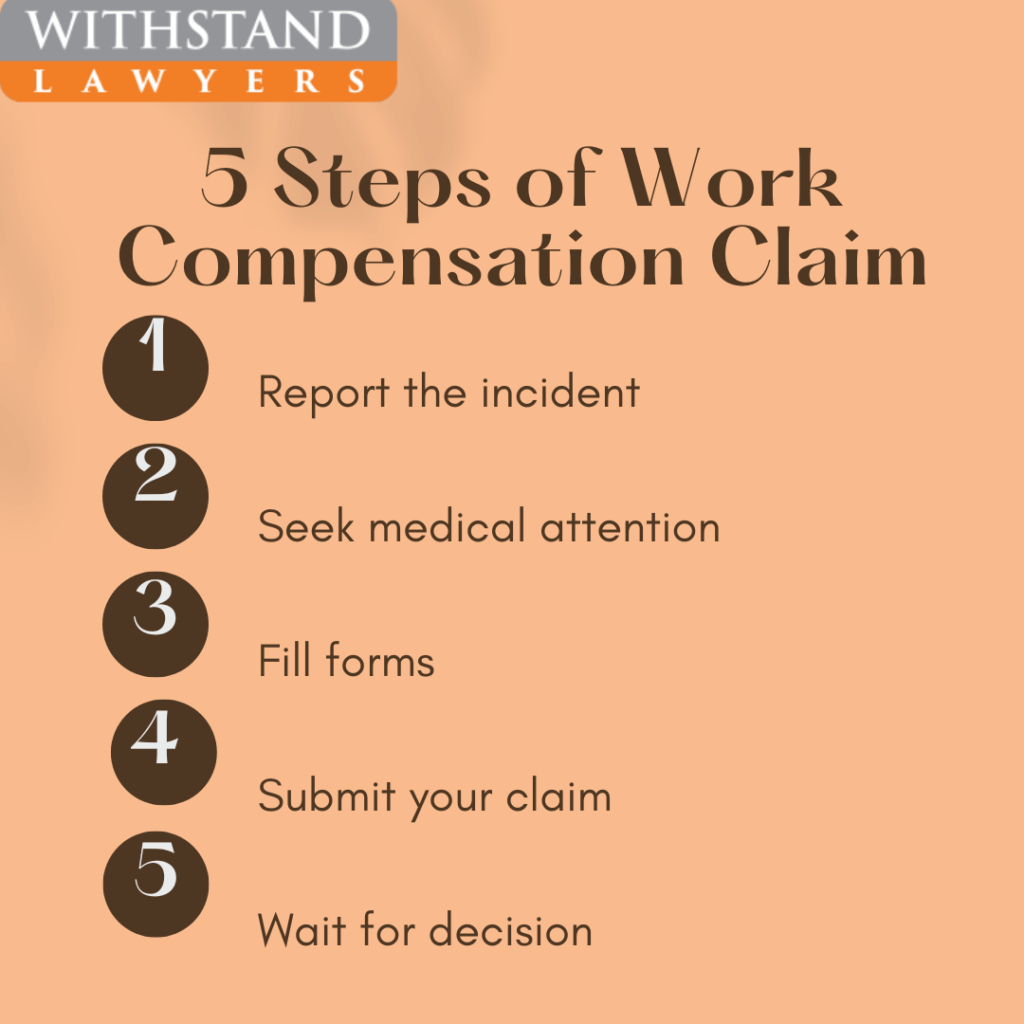
It is crucial to know how to make a work compensation claim otherwise, you cannot receive the remedy you deserve. Here are the steps you’ll need to follow:
- Report the incident to your employer: As soon as possible after the incident, you should report it to your employer. This will start the process of filing a work compensation claim. You will need to provide detailed information about the incident, including:
- when it occurred
- Where it occurred
- What caused the injury or illness
- The extent of your injury
- Seek medical attention After any injury you will need medical treatment and nothing is more valuable than your health. First minutes of the treatment can be critical for your well-being. In addition, your medical records will be an important part of your work compensation claim. Therefore, seeing a doctor as soon as possible is a crucial step for a successful work compensation claim.
- Complete the Work Injury Claim Form & Certificate of Capacity: You can find the work injury claim form here. Be sure to fill out the forms completely and accurately. The certificate of capacity does have one section for you to sign and complete as well.
- Submit your claim: Once you have completed the necessary forms, submit your claim to your employer’s work compensation insurer. They will review your claim and may request additional information or documentation to support it.
- Wait for a decision: The work compensation insurer will review your claim and make a decision about whether to accept or deny it. If your claim is accepted, you’ll begin receiving benefits to cover medical expenses and lost wages. Otherwise, you can appeal to the decision.
Top 5 benefits of legal representation for your worker compensation claim
While it is possible to file a claim on your own, there are several reasons why you may want to consider working with an experienced work compensation lawyer:
- Lawyers ensure that your claim is filed correctly: Filing a worker compensation claim can be complex and time-consuming. An experienced lawyer can help ensure that all necessary forms are completed correctly and submitted on time.
- Lawyers can help you understand your rights: Work compensation laws can be confusing, and it can be difficult to know what benefits you are entitled to. A lawyer can help explain your rights and ensure that you receive the full work injury compensation you are entitled to.
- Lawyers can negotiate on your behalf: If your work compensation claim is denied or if you are not receiving the benefits you are entitled to, a lawyer can negotiate on your behalf with the work compensation insurer.
- Lawyers can reduce the claims processing duration for worker compensation: Work compensation claims can take a long time to process, especially if there are disputes or complications involved. An experienced lawyer can help ensure that all necessary information is provided and can work with the work compensation insurer to resolve any issues that arise. This can help speed up the claims processing duration.
- Lawyers can represent you in court: If your case goes to court, a lawyer can represent you and present your case to a judge or jury.
If you are unsure whether you need legal representation for your work compensation claim, it is a good idea to take legal advice from a lawyer to discuss your options.
How can Withstand Lawyers help you?
I have written a detailed guide to work compensation in Australia in this article. If you or someone close to you has experienced a workplace injury, feel free to reach out to me for advice on what you’re entitled to.
At Withstand Lawyers, we operate on a No Win No Fee basis. This means that if, in the unlikely event, we cannot win your case, you won’t be responsible for paying our costs.
Workers Compensation FAQ
Who is eligible for workers compensation in NSW?
You are eligible if you sustained an injury or illness while performing your job duties or as a direct result of your work. This includes physical injuries such as broken bones or sprains, and occupational illnesses caused by exposure to dangerous substances in your workplace over time.
What are my workers compensation entitlements?
Injured workers have five main entitlements, including weekly payments based on your salary, compensation for medical expenses, domestic assistance for daily tasks such as cleaning and laundry, and a lump-sum payment for permanent impairment. Together these help cover your income and care while you recover from a work injury.
When can I receive a lump-sum payment for a work injury?
A lump-sum payment becomes available once your physical work injury reaches 10% whole person impairment. For a psychological injury, the threshold is 14% whole person impairment. Our workers compensation lawyers can arrange the medical assessment needed to establish your impairment level and secure your entitlement.
Can I make a common law claim for a work injury?
If your work injury causes 15% or higher whole person impairment, you may be eligible to make a common law payout claim. This is a one-time payment covering the income you will lose because of your injury. Getting legal advice early helps you meet the requirements and deadlines.
How is workers compensation different from a TPD claim?
To be eligible for workers compensation, your health condition must be directly related to your work. To qualify for TPD, your condition must not be connected to your job, such as an injury from a car accident on holiday. The two schemes are separate and assessed under different rules.
What types of work injuries can I claim for?
You can claim for physical injuries like broken bones and sprains, as well as occupational illnesses caused by exposure to dangerous substances. Both sudden injuries and conditions that develop gradually over time from your work duties can support a workers compensation claim in New South Wales.
How do I make a workers compensation claim?
Report your injury to your employer, seek medical treatment and obtain a certificate of capacity from your doctor, then lodge your claim with the insurer. Our workers compensation lawyers guide you through each step and make sure you claim every entitlement you are owed under the scheme.
How much does a workers compensation lawyer cost?
Withstand Lawyers act on a no win, no fee basis with no upfront costs and a 99% success rate. You only pay if your claim succeeds, and we explain all costs before you sign, so there is no financial risk in getting your claim assessed today.
About the author
Issa Rabaya · Principal Lawyer and Director
✓ Admitted to the Supreme Court of NSW and High Court of Australia ✓ LLB ✓ IRO-approved ✓ Law Society of NSW
Acts for injured people in CTP, workers compensation, TPD and public liability claims.
Why Choose Withstand Lawyers for Your Workers Compensation Claim?
Being hurt at work can leave you facing lost wages, mounting medical bills and uncertainty about your future. At Withstand Lawyers, we take that pressure off your shoulders. Our workers compensation lawyers explain your entitlements in plain language, arrange the medical assessments that establish your impairment, and handle every step of your claim so you can focus on recovering. Whether you need weekly payments, a lump-sum payment or a common law payout, we fight to secure the maximum compensation you are entitled to, with no upfront costs. Over $47 million recovered, 99% success rate, no win, no fee.
Call Withstand Lawyers on 1800 952 898 for your free claim check today.
★ 4.9 on Google (265+ reviews)