
Mental Health Workers Compensation | Claims Guide

Key Takeaway: Most reputable TPD lawyers, including Withstand Lawyers, work on a no win, no fee basis. That means you pay no legal fees up front, and fees only become payable if your claim succeeds and you receive a payout. Your costs agreement should set everything out in writing before you sign, so there are never any surprises.
TPD Lawyer Fees: Quick Answers
In this blog, I’ll guide you through the essential steps to help you claim the workers compensation you deserve for your mental health injury. Together, we’ll explore the mental health conditions that qualify for compensation, the entitlements available to you, and the step-by-step process for lodging your claim.
Key Statistics on Mental Health and Workers Compensation Claims
If you’re feeling isolated in your struggle, let me reassure you: thousands of workers across Australia face similar challenges every year. Mental health injuries are becoming more widely recognised within the workers compensation system, and many people—just like you—are successfully claiming the support they deserve.
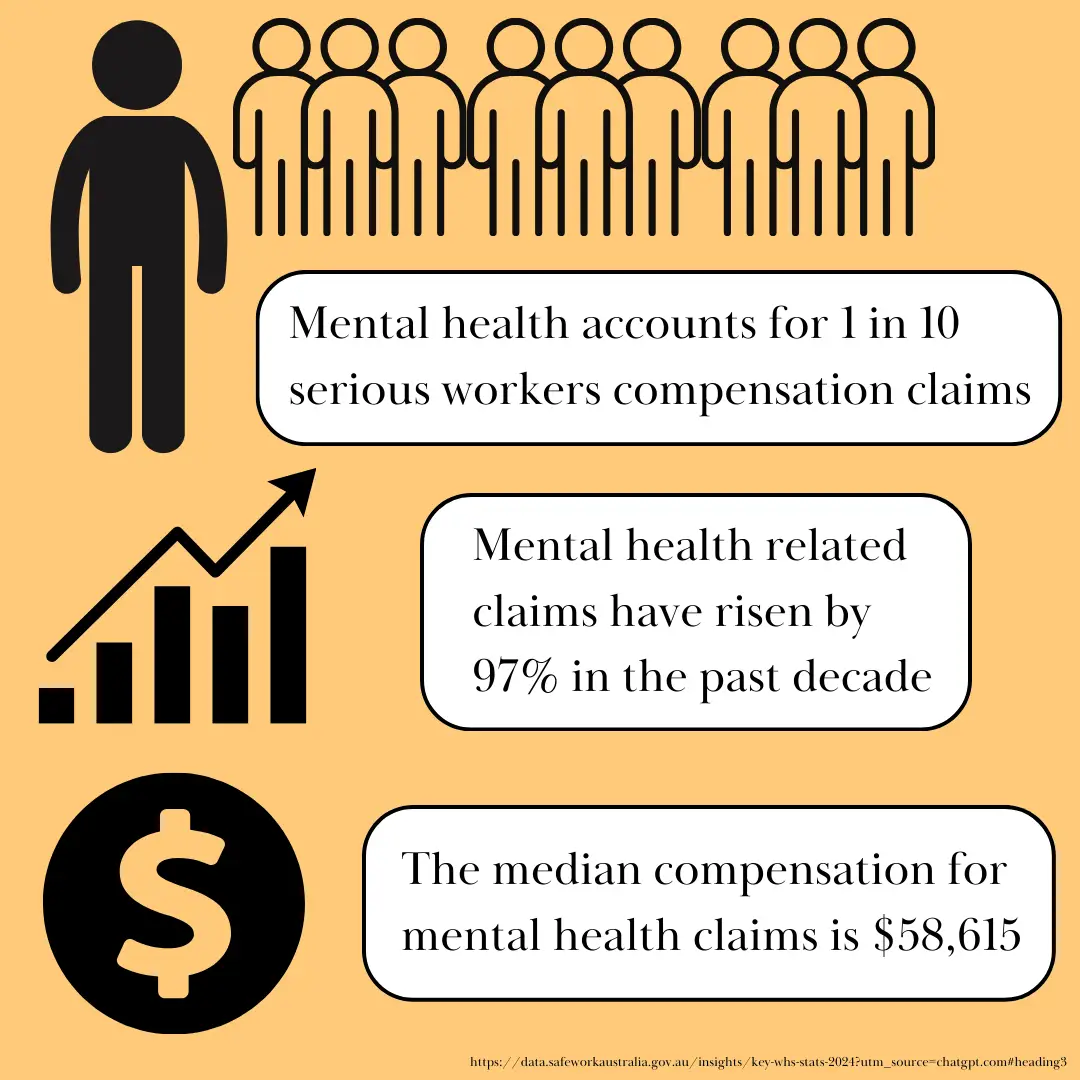
The numbers speak volumes:
- Mental health claims are growing: Over 14,600 workers lodged mental health-related workers compensation claims in 2022-23. That’s 10.5% of all serious claims, and the number has nearly doubled over the past decade.
- Compensation is significant: The median payout for mental health claims is $58,615—nearly four times higher than the median for physical injury claims.
- Recovery takes time: Mental health claims involve a median of 34.2 weeks off work per claim, compared to 8 weeks for physical injuries.
These figures from SafeWork Australia highlight a critical truth: your mental health matters, and help is available.
Let’s dive into the conditions that qualify, the entitlements you can access, and the steps to take for your mental health workers compensation claim.

What Mental Health Conditions Qualify for Workers Compensation?
Mental health injuries can have a profound impact on your life, and under workers compensation laws in NSW, these injuries are just as valid as physical ones—provided they meet certain criteria.
It’s important to understand that symptoms like anxiety, stress, or emotional distress on their own are not enough to qualify for a workers compensation claim. To be eligible, you must have a diagnosed mental health condition, supported by medical evidence, that is directly caused or significantly aggravated by your workplace.
Diagnosed Mental Health Conditions That May Qualify for Workers Compensation
Here are some examples of mental health conditions I’ve successfully helped clients secure workers compensation for:
- Post-Traumatic Stress Disorder (PTSD): Often experienced by workers exposed to traumatic events, such as first responders, healthcare professionals, or those in high-risk industries.
- Depression: Caused or worsened by workplace factors like bullying, harassment, or chronic job insecurity.
- Anxiety Disorders: Including generalised anxiety disorder or panic disorders, often stemming from prolonged stress or exposure to workplace violence.
- Adjustment Disorders: Occurring when someone struggles to adapt to major changes or stressful events at work, such as redundancies, demotions, or conflicts.
If you’re unsure whether your mental health condition qualifies for a workers compensation claim, our compassionate and experienced team is here to help. Share your story with us, and we’ll provide a free, no-obligation claim assessment to help you understand your rights and options. Contact us today to start your claim.
What Are Your Entitlements for Mental Health Under Workers Compensation in NSW?
If your mental health claim is accepted under workers compensation in NSW, you may be entitled to several benefits designed to support your recovery and financial stability. These entitlements aim to reduce the stress of managing your condition and help you focus on your well-being. Here’s what you may be able to access:
Weekly Payments for Lost Wages
If your mental health condition prevents you from working, you can receive income support to replace part of your lost wages.
- First 13 Weeks: Payments are calculated based on 95% of your pre-injury average weekly earnings.
- Weeks 14–130: You may receive up to 80% of your pre-injury average weekly earnings if you’re unable to work or if you’re working less than 15 hours per week.
- Beyond 130 weeks: After this time, payments will stop unless you have been assessed at above 20% WPI. In this instance, payments of 80% pre-injury average weekly earnings will continue until retirement or until a Common Law Claim is made. Click here to read more about WPI calculations.
Medical and Treatment Expenses
Your reasonable and necessary medical expenses are covered, including:
- Psychological or psychiatric consultations.
- Medication prescribed for your condition.
- Allied health services, such as counseling or therapy.
This coverage ensures you have access to the treatment you need without worrying about out-of-pocket costs.
Permanent Impairment Compensation
If your mental health condition leads to permanent impairment, you may be entitled to a lump sum payment. This is determined through a Whole Person Impairment (WPI) assessment, which is completed by an Independent Medical Examiner (IME). The assessment is generally conducted at least 6 months after the initial diagnosis. Our team of workers compensation lawyers are able to organise this assessment for you.
- To qualify for a lump sum payment, your impairment must reach a minimum threshold of 15% WPI for mental health injuries.
- This payment is designed to acknowledge the long-term impact your injury has had on your life.

How to Make a Workers Compensation Claim for Mental Health
Seek Medical Support and Diagnosis
The first and most crucial step is to visit your GP, psychologist, or psychiatrist to:
- Diagnose your condition: Symptoms like stress or anxiety alone aren’t enough; you’ll need a formal diagnosis of a recognized mental health condition, such as depression, PTSD, or an anxiety disorder.
- Establish the work connection: Your healthcare professional must document how your mental health condition is linked to your job. This connection is vital to your claim.
- Obtain a Work Capacity Certificate: This certificate confirms your diagnosis, the impact of your condition on your ability to work, and the treatment you require.
Notify Your Employer
Under NSW law, you are required to inform your employer about your injury as soon as possible. You don’t need to share personal details about your condition, but you must provide enough information for them to notify their insurer.
Lodge Your Workers Compensation Claim
Once your employer is notified, you can submit your claim through their workers compensation insurer. To do this, you’ll need:
- A completed Workers Compensation Claim Form.
- Your Work Capacity Certificate and any supporting medical reports.
- Relevant workplace documents, such as incident reports, emails, or witness statements, to support your case.
Insurer’s Decision
The insurer will assess your claim and determine whether to accept or deny it. They may contact your healthcare providers or employer for additional information during their investigation.
If your claim is accepted, you’ll begin receiving entitlements, such as weekly payments or medical expense coverage, based on your injury and circumstances.
Why Use a Lawyer for a Mental Health Workers Compensation Claim?
Navigating a mental health workers compensation claim can be a daunting and emotional process. Unlike physical injuries, mental health claims often face greater scrutiny, and proving the connection between your condition and your workplace requires strong evidence and a clear understanding of the legal system. This is where having an experienced workers compensation lawyer can make a world of difference.
Our team of experienced workers compensation lawyers will:
- Prove Your Case
We will gather strong medical and workplace evidence to establish the connection between your mental health condition and your job, presenting your case clearly and in line with legal requirements. - Protect Your Rights Against Insurer Pushback
Our lawyers are skilled at addressing insurer tactics like delays, denials, or disputes to ensure your claim is treated fairly and with the attention it deserves. - Maximise Your Entitlements
We’ll help you secure the full range of benefits, including weekly payments, medical support, and lump sum compensation for permanent impairment, while advising on potential work injury damages claims. - Streamline the Entire Process
From handling insurer communications to lodging claims and representing you in disputes, we take the stress off your shoulders, guiding you every step of the way.
Making a Common Law Claim for Mental Health
If your mental health condition was caused by negligence in your workplace, you may be entitled to pursue a common law claim, also known as a work injury damages claim. This type of claim is separate from a standard workers compensation claim and focuses on obtaining compensation for past and future economic losses due to your employer’s failure to provide a safe working environment.
To pursue a common law claim for mental health, you must meet these specific criteria:
- Permanent Impairment Threshold: You must have a Whole Person Impairment (WPI) of at least 15%, confirmed through an independent medical assessment.
- Negligence by Your Employer: You’ll need to demonstrate that your employer’s actions—or failure to act—directly caused or significantly contributed to your injury.
A common law claim for psychological injury serves as a final settlement of your entitlements for the injury. This means that when you accept a lump sum payment through a work injury damages claim, you waive your rights to any future weekly payments or medical benefits under the workers compensation system.
While a common law claim can provide a larger lump sum to compensate for economic losses, it’s important to understand that you’ll no longer have access to ongoing workers compensation support once the claim is resolved.
Making this decision requires careful consideration of your financial needs and future well-being. Our experienced work injury damages lawyers are here to guide you every step of the way. We’ll explain your entitlements in clear, straightforward terms so you can make an informed decision that’s right for your future.
You can read more about common law claims here.
No Out-of-Pocket Costs with Withstand Lawyers
One of the biggest concerns people have when thinking about making a workers compensation claim is, “What will this cost me?” The good news is, it won’t cost you a thing. Whether you’re at the start of your claim or navigating a dispute, there are no out-of-pocket expenses for legal costs.
This is thanks to the Independent Review Office (IRO), which covers all legal fees and disbursements related to workers compensation claims. This includes the costs of gathering evidence, arranging assessments by independent medical examiners, and handling the complexities of your case. What’s more, these fees aren’t deducted from your compensation, and they’re covered no matter the outcome of your claim.
That means you can focus on what really matters: your recovery. You don’t have to worry about upfront payments, hidden fees, or financial stress. At Withstand Lawyers, we work closely with the IRO to ensure our clients receive the legal representation they need, entirely free of charge.

TPD Lawyer Fees FAQ
Do I pay anything up front for a TPD claim?
What happens to fees if my TPD claim is unsuccessful?
Are TPD lawyer fees regulated?
What are disbursements in a TPD claim?
Can I switch to a no win, no fee TPD lawyer partway through?
Does a higher fee mean a better TPD lawyer?
What should a TPD costs agreement include?
How much does Withstand Lawyers charge for a TPD claim?
About the author
Issa Rabaya · Principal Lawyer and Director
✓ Admitted to the Supreme Court of NSW and High Court of Australia ✓ LLB ✓ IRO-approved ✓ Law Society of NSW
Acts for injured people in CTP, workers compensation, TPD and public liability claims.
Why Choose Withstand Lawyers for Your TPD Claim?
Worrying about legal costs should never stop you claiming the TPD benefit you are entitled to. That is why Withstand Lawyers runs these claims on a no win, no fee basis and is upfront about every cost from day one. We handle the paperwork, chase the insurer and keep you informed, so you can focus on your recovery rather than your bank balance. Our team has helped people across Australia secure superannuation and TPD payouts, and we treat each client with honesty and genuine care. There are no hidden fees and no pressure. Over $47 million recovered, 99% success rate, no win, no fee.
Call Withstand Lawyers on 1800 952 898 for your free claim check today.
★ 4.9 on Google (265+ reviews)