
TPD vs Income Protection | What's the Difference?

Written by
Principal Lawyer and Director · Last updated 31 August 2026
4.9 from 265+ verified Google reviews Read all reviews
Key takeaway: TPD insurance pays a one-off lump sum, typically between $70,000 and $2,000,000, if you are permanently unable to work in any job suited to your education, training or experience. Income protection instead pays up to 95% of your pre-injury income for the first 6 months, usually reducing to about 70%, while you are temporarily off work.
TPD vs Income Protection: Quick Answers
When you’re unable to work due to illness or injury, understanding the key differences between TPD vs Income Protection insurance is essential for securing your financial future.
While both provide valuable support during challenging times, they serve very different purposes. TPD insurance (Total and Permanent Disability) offers a lump sum payout if you’re permanently unable to return to work, helping cover long-term expenses like mortgages and medical care. In contrast, Income Protection insurance provides regular monthly payments if you’re temporarily unable to work, covering everyday costs until you recover.
Choosing the right option can be complex, which is why speaking with an experienced TPD lawyer or income protection lawyer can make all the difference. In this guide, we explain how each policy works and which may suit your situation best.
TPD vs Income Protection Overview
TPD Insurance (Total and Permanent Disability):
Provides a one-time lump sum payout if you become permanently unable to work in any job suited to your education, training, or experience. It’s designed to help cover long-term expenses, like paying off a mortgage or funding ongoing medical care.
Income Protection Insurance:
Offers a regular income, typically a percentage of your salary, if you’re temporarily unable to work due to illness or injury. This type of insurance is intended to cover everyday expenses until you can return to work or reach the policy’s end date.
What is TPD Insurance?
TPD insurance, or Total and Permanent Disability insurance, is designed to provide a financial safety net if you’re permanently unable to work due to a severe injury or illness. In simple terms, if you can’t return to any job suited to your education, training, or experience because of your condition, TPD insurance can pay out a one-time lump sum.
This payout can be used to cover a range of long-term expenses, such as:
- Paying off your mortgage or other debts
- Funding ongoing medical treatments or rehabilitation
- Modifying your home to accommodate new physical needs
- Supporting your family’s financial well-being
The goal of TPD insurance is to give you and your loved ones some stability and financial security at a time when your income is no longer reliable. This is why most Aussies have TPD cover bundled automatically in their super, even if they don’t know they do.
What is Income Protection Insurance?
Income Protection insurance offers a different kind of financial safety net compared to TPD insurance. Instead of a one-time lump sum, it provides a regular income to someone who is temporarily unable to work due to illness or injury. As a superannuation insurance benefit, Income Protection payments are designed to help cover everyday living expenses while you recover.
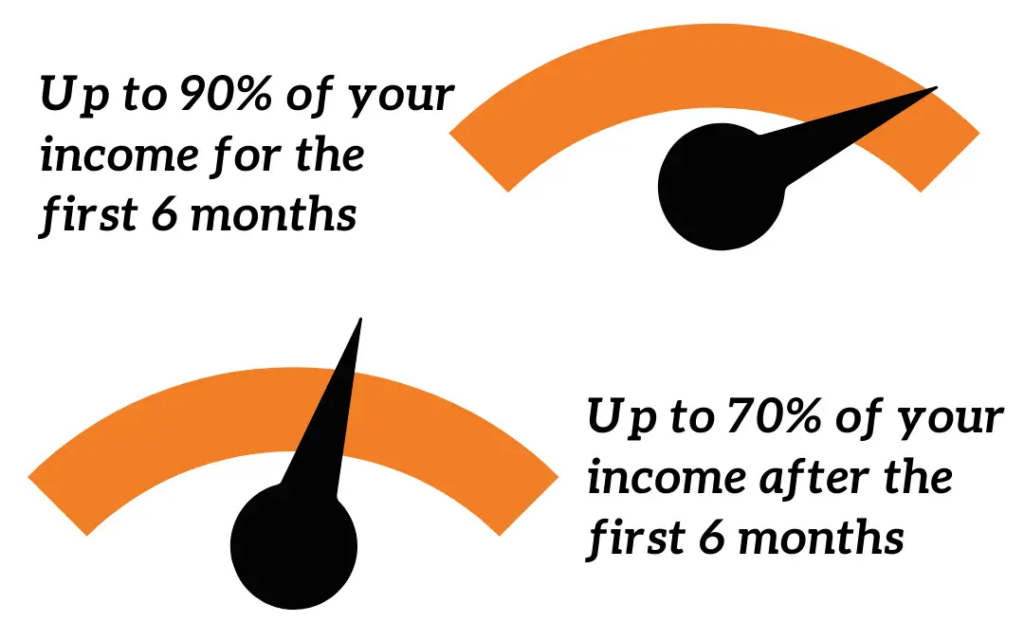
The amount you receive and the duration of the payments depend on the specifics of your policy. Typically, up to 95% of your pre-injury income may be paid during the first six months, with the benefit amount reducing to around 70% after that period.
The length of time you can receive these benefits also varies. Depending on your policy, payments could continue for a set period—such as two or five years—or up until a specified age, like 65. The exact terms are outlined in your superannuation insurance policy, so it’s important to understand your coverage details.
The Key Differences Between TPD vs Income Protection Insurance
| Income Protection | TPD |
|---|---|
| Can be claimed when you are unable to work | Can be claimed if you are no longer able to work in your usual or any occupation based on your education, training and experience |
| Pays a monthly benefit, during a predetermined period | Usually pays a lump sum payment |
| Benefits include up to 95% of the pre-injury income for a period of time of usually 2-5 years | Benefit payouts amount typically range between $70,000 - $2,000,000 |
While not all superannuation funds automatically provide coverage for both, you can opt to have both TPD Insurance and Income Protection to better secure your future. Having both types of coverage can offer greater financial benefits if you become unable to work, providing comprehensive support for your needs.
What Percentage of Australians Are Covered by Income Protection Insurance?
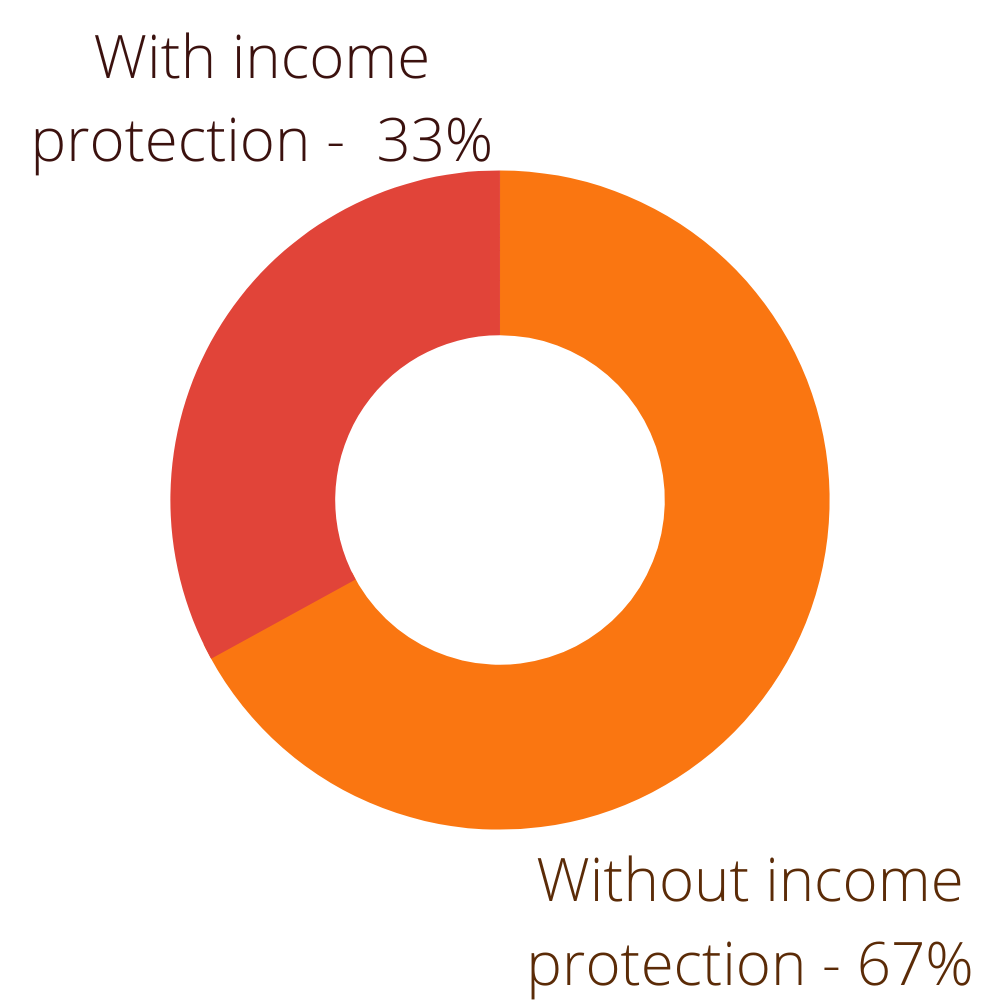
According to Rice Warner’s report in 2017, only 33% of Australians have income protection that can financially support them if they become unable to work.
Making a Successful Income Protection Claim in Australia
1. Notify Your Employer and Superannuation Insurer
As soon as you become unable to work, it’s important to reach out to both your employer and your superannuation insurer to initiate your income protection claim. Your insurer will guide you through the process and send you the necessary paperwork to get started.
2. Obtain a Statement from Your GP
Request a detailed statement from your GP confirming that you are unable to work due to your medical condition. This statement will be a crucial piece of evidence to support your claim.
3. Complete the Income Protection Claim Form
Fill out the income protection claim form provided by your superannuation insurance company. Make sure to include all required documents, such as the GP statement, work history, recent payslips, identification, and any other relevant information. If you find the process overwhelming, our TPD lawyers are here to assist you. We often lodge income protection claims alongside TPD claims for our clients, ensuring everything is handled smoothly.
4. Wait for the Outcome
Once you’ve submitted your claim with the correct supporting documentation, your next step is to wait for your insurer’s response. Be aware that most policies have a waiting period of 0 to 90 days before payments can begin.

Can You Have Both TPD and Income Protection Insurance?
Yes, you can hold both types of cover, and for many individuals this is the most comprehensive strategy. Holding both means:
-
You have income protection to keep money flowing if you’re temporarily off work.
-
You have TPD cover to fall back on if you are permanently unable to work.
Important to check: how your policies interact (some super funds may treat them differently), whether there are offsets or definitions that link them, and whether premiums are cost‐effective. TPD and Income Protection lawyers can review your policies, check definitions across both covers, and advise if they are complementary or if one is redundant given your situation.
Injured and unsure if you have the right cover? Contact our TPD and Income Protection Lawyers today for a free claim assessment to find out what you’re eligible to claim.
What Should I Do If My TPD or Income Protection Claim is Refused?
Having your TPD or Income Protection claim refused can be frustrating and overwhelming, especially when you’re already dealing with the stress of being unable to work. But a denied claim doesn’t mean you’re out of options. In many cases, refusals can be challenged successfully with the right guidance.
The first step is to carefully read the insurer’s denial letter to understand their reasons for rejecting your claim. This might include issues like insufficient medical evidence, policy exclusions, waiting period disputes, or a narrow interpretation of your disability. From there, gathering stronger medical evidence, clarifying factual errors, or challenging unfair interpretations can significantly improve your chances.
At Withstand Lawyers, we specialise in helping Australians overturn denied TPD and Income Protection claims. Our lawyers can review your policy, assess the denial, identify weaknesses in the insurer’s reasoning, and guide you through the appeal or dispute process. We handle communication with the insurer on your behalf, gather supporting evidence, and ensure your rights are protected at every step.
If your claim has been refused, don’t navigate it alone. Contact us today for a free claim assessment and get clear advice on your best next steps.
When to Speak to a TPD or Income Protection Lawyer
You should speak with a TPD or Income Protection Lawyer when:
-
You’re about to lodge a claim and your policy wording is unclear (definitions like “own occupation”, “any occupation”, “unable to return to work”).
-
You’ve had a claim rejected or delayed and you suspect the insurer misinterpreted your policy.
-
You’re unsure whether your condition meets the “total & permanent” threshold for TPD or the “unable to work” threshold for Income Protection.
-
You’re self‑employed, contractor, or have complex income structures (which complicate income protection claims).
A qualified TPD lawyer or income protection lawyer will review the Product Disclosure Statement (PDS), claim history, insurer communications and your medical evidence. Engaging legal support early often improves your claim outcome and may reduce stress and errors.
Contact our TPD and Income Protection Lawyers today for a free claim assessment to see where you stand after an injury. We can act on your behalf on a No Win No Fee basis to ensure you get the maximum compensation available.
Success Stories: Real Example of a Successful Income Protection Claim
The Case
Liam, a 48-year-old dad juggling the responsibilities of raising three kids, had built a stable life for his family through his work as a bookkeeper, earning $90,000 a year. But in 2020, a sudden and serious back injury struck while he was at home, leaving him in pain and unable to work. To make matters worse, the nature of the injury at home mean that Liam wasn’t eligible for any personal injury claim. The situation left him facing both physical challenges and financial uncertainty.
The Outcome
Thankfully, Liam had income protection insurance, which became his financial lifeline while he was stuck at home and unable to work. The insurance provided him with monthly payments to cover his daily expenses and support his family. During the first six months, he received $6,180 each month—90% of his pre-injury salary. After the sixth month, the payments adjusted to $5,150, equaling 75% of his previous income.
When he finally recovered and was ready to get back to work, the income protection payments stopped. But during those challenging months, the financial support made all the difference, allowing him to focus on healing without the constant worry of bills piling up.
TPD was not a factor in Liam’s case as he was able to return to work in his field.
To read about injuries that lead to TPD claims, click here.

Reach our Superannuation Lawyers for a Free Claim Check
Our experienced superannuation lawyers specialise in TPD and income protection claims and offer a free claim check to assess your case if you are injured or unable to work. We work on a No Win, No Fee basis, meaning you’ll only be charged if we successfully win your case, and you won’t pay any upfront costs.
Our TPD lawyers are ready to help. Whether you’re just starting your superannuation claim or facing hurdles along the way, we’re here to ensure you receive your full entitlements as quickly as possible.
Reach out to us anytime at 1800 952 898 or fill out our online form for a free claim assessment today.
TPD vs Income Protection FAQs
What is the difference between TPD and income protection?
Can you have both TPD and income protection insurance?
How long does income protection pay for?
How much does TPD pay compared to income protection?
Can I claim TPD and income protection at the same time?
What percentage of Australians have income protection insurance?
How do I make a successful income protection claim?
What should I do if my TPD or income protection claim is refused?
About the author
Issa Rabaya · Principal Lawyer and Director
✓ Admitted to the Supreme Court of NSW and High Court of Australia ✓ LLB ✓ IRO-approved ✓ Law Society of NSW
Acts for injured people in CTP, workers compensation, TPD and public liability claims.
Why Choose Withstand Lawyers for Your TPD or Income Protection Claim?
When illness or a serious injury stops you working, choosing between policies and definitions is the last thing you need. Withstand Lawyers reviews your superannuation cover, tells you plainly what you can claim, and runs your TPD or income protection claim from lodgement to payout. Withstand Lawyers brings decades of experience, more than $60 million recovered for clients and a 99% success rate to every claim, including refused and delayed ones. With Withstand Lawyers there are never upfront costs, because every claim is handled on a No Win No Fee basis.
Call 1800 952 898 for a free claim check. No win, no fee, no upfront costs.
“Working with Esther has been an absolute blessing during an incredibly difficult time. Anyone who has ever had to navigate an insurance claim knows just how difficult, overwhelming, and anxiety-inducing the entire process can be. Before reaching out to Withstand Lawyers, I was constantly stressed and deeply overwhelmed by the system. The firm made the initial intake process incredibly smooth, and they placed me in the hands of my lawyer, Esther. From that moment on, from the first conversation, I finally found my solid ground. Esther has completely transformed how I navigate this unfortunate situation. Because she handles my matter directly, I have a direct line of contact with her and never have to jump through hoops to get support. Esther’s presence alone has given me immense confidence in my claim. What sets her apart is her perfect balance of professional mastery and genuine empathy. As a client, having a lawyer who truly listens and supports you when your mind is filled with doubt is a massive relief. She doesn’t just manage a file — she consistently protects her client’s peace of mind. Her recommendations are always highly logical, realistic, and clear-cut. She cuts through the legal confusion and tells you exactly where you stand, which is exactly what you need during the hardest times of your life. I feel incredibly lucky to have Esther and her team at Withstand Lawyers by my side. For anyone out there facing a difficult time with an insurer and looking for a legal advocate who offers absolute clarity, strength, and compassion — I cannot recommend Esther highly enough. She is a truly admirable professional who genuinely cares about the people she protects. Truly grateful!” “I have searched top lawyers (personal injury) in Sydney. I found Withstand Lawyers so I rang them up and asked I need lawyers that are nicer and more understanding despite what I am going through. They exceeded my expectations especially Issa, he always remind everyone to be more cautious when speaking to me and I really appreciate that. I am satisfied that my case (MVA) turned out to be successful. Withstand lawyers is more than 5 stars. Can’t recommend highly enough.” “I would like to express my deepest appreciation for the incredible support I’ve received over the past 4.5 years. My case has been long, complicated, and filled with challenges, but Issa and his team stood by me through every step with genuine care, professionalism, and dedication. Their compassion has meant just as much to me as their legal expertise. They didn’t just handle my case, they helped me through some of the most difficult years of my life. I wholeheartedly recommend them to anyone who needs genuine support, honesty, and a team that truly cares about your wellbeing.” “Thank you Withstand Lawyer for your exceptional work, professionalism and easy process for successfully assisting me with my TPD claim. I am thankful for your support. I highly recommend Withstand Lawyers and the services they provide.” “Had a very positive experience with Withstand Lawyers. The team was professional, knowledgeable, and supportive throughout the entire process. They took the time to explain everything clearly, kept me informed at every stage, and responded promptly to my questions. Their attention to detail and commitment to achieving the best possible outcome gave me confidence from start to finish. I truly appreciate their dedication and excellent service, and I would highly recommend Withstand Lawyers to anyone looking for reliable and trustworthy service.” Every TPD and superannuation claim is handled by a personal injury lawyer with dedicated TPD and superannuation experience. Issa Rabaya Director, Lawyer Founder and Director with 12 years' experience since his 2014 admission, previously at the largest litigation law firm in Australia. A personal injury lawyer for serious injuries, leading Withstand Lawyers' work across every claim type, with settlements reaching into the millions, including a $6.3 million motor vehicle accident result. Mihana Wen Associate Associate with 6 years' experience since 2020 and a recent $1.95 million motor vehicle accident settlement, known for not taking no for an answer and lodging appeal submissions for injuries insurers try to deem below the 11% whole person impairment threshold for pain and suffering. The go-to for car accident claims, guiding clients from the first CTP submission through to settlement with a compassionate, hands-on approach. Isabel Sarcia Senior Lawyer Lawyer with 6 years' experience since 2020, working exclusively in TPD and superannuation claims, necessary because these claims turn on strict super fund definitions and procedure that few generalist lawyers see day to day. Specialises in lodging TPD claims efficiently, cutting through fund delays so claims are accepted faster and in full. Maria Drosos Associate Lawyer with 6 years' experience since 2020, working exclusively in TPD and superannuation claims, necessary because these claims turn on precise policy wording and medical evidence that few generalist lawyers handle daily. Specialises in lodging TPD claims efficiently, managing the insurer requests and medical reports that decide the outcome. Chenoa Ingram Lawyer · 4+ yrs experience Lawyer with 4+ years' hands-on experience in personal injury claims, built inside the firm before her 2026 admission, known for being organised and efficient in progressing clients' workers compensation, work injury damages, public liability and TPD claims. Lauren Bergan Lawyer · 4+ yrs experience4.9 ★ — 265+ Reviews
Meet Your TPD & Superannuation Lawyers